Nutrition
Nutrition
Nutrition


 Solution
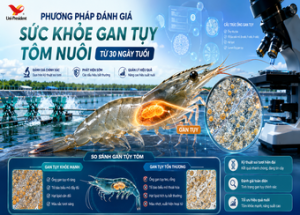
The hepatopancreas is the most vital organ determining the growth and survival rate of shrimp, especially during the stage after 30 days of age (DOC 30). Instead of relying solely on external visual observation, this article will guide farmers through the technique of fresh cell microscopy to accurately assess hepatopancreas health by examining lipid droplet density, tubule structure, and cell pigmentation. This is a powerful tool for the early detection of pathological signs, enabling timely interventions to protect the success of the crop.
Join Uni-President Vietnam in mastering this fresh smear technique to gain an "insider's view," allowing for precise and timely management decisions for a successful harvest!

Minerals are more than just Ca and Mg. Learn how macro and trace minerals impact shrimp growth, molting, and immunity, and how to supplement effectively in aquaculture.

In shrimp farming, the first 30 days after stocking are a critical stage that determines the health of the hepatopancreas and the overall growth rate of the shrimp. When water quality, nutrition, and hepatopancreas support are properly managed, shrimp grow faster, become more resistant to disease, and achieve a higher survival rate.